Why we joined the AI Alliance
We've joined the AI Alliance alongside AI4Bharat, IIT Jodhpur, Infosys, People+AI, Sarvam AI, and Wadhwani AI. A short note on why the open-AI thesis matters specifically for agriculture and what we are bringing into the alliance.
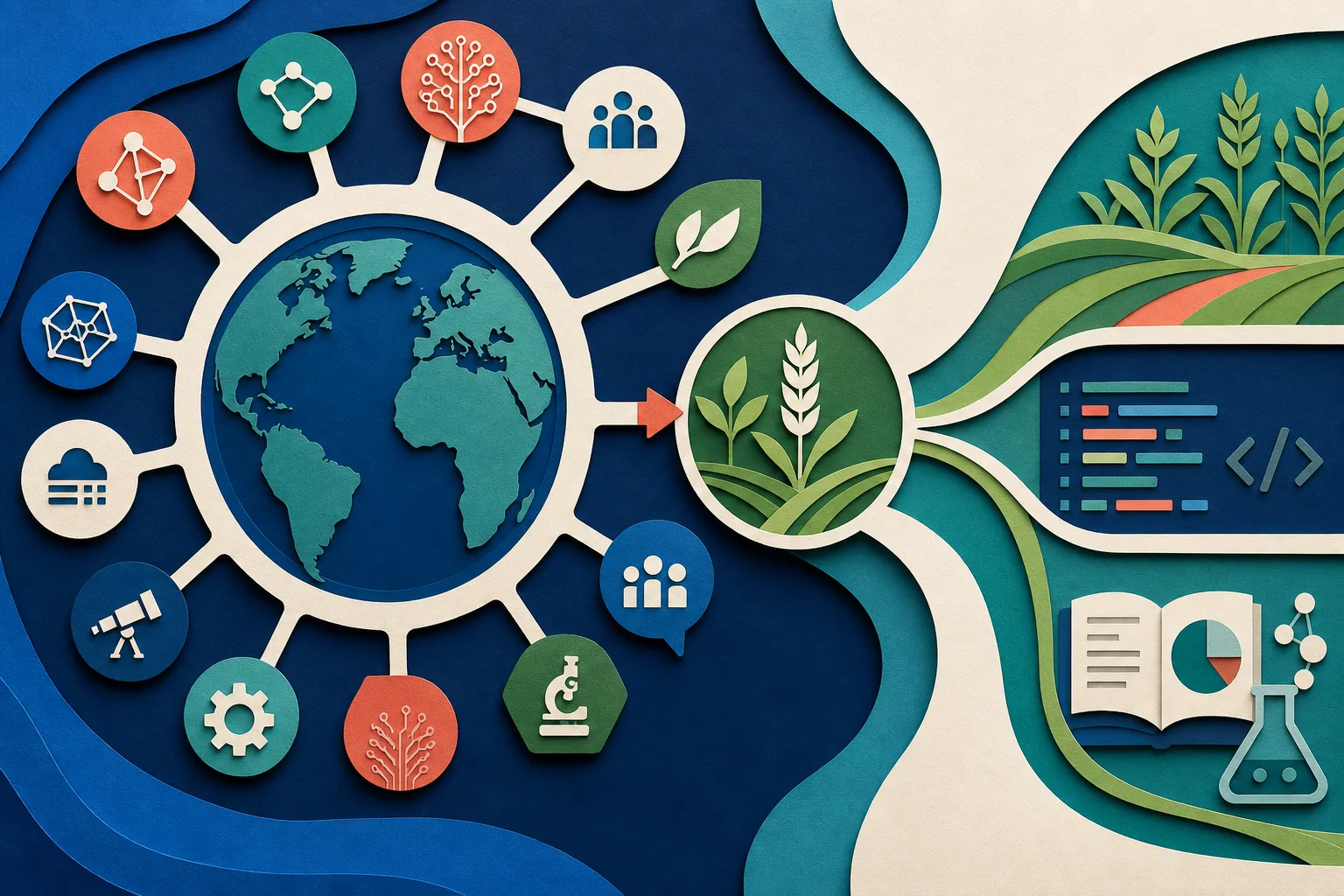
KissanAI has joined the AI Alliance, alongside AI4Bharat (IIT Madras), IIT Jodhpur, Infosys, People+AI, Sarvam AI, and Wadhwani AI. The announcement went up yesterday on the alliance blog. A short note from us on what this means and why we said yes.
The AI Alliance is a global coalition advancing open and responsible AI development. It is co-led by IBM and Meta, with a roster of academic institutions, industry contributors, and frontier-model labs across the world. It is neither a funding mechanism nor a certification body: coordination among people who believe the next phase of AI should not be owned by three vendors.
That principle matters specifically for agriculture, and that is most of why we joined.
Why open matters for agricultural AI
Agriculture is one of the domains where the cost of getting AI wrong falls on the people with the least ability to absorb it. A wrong recommendation to a smallholder farmer is not a bad customer experience. It is a season’s income. The same recommendation, made through a closed model whose reasoning is unauditable and whose training data is unknown, leaves the farmer with no recourse and the regulator with no ability to evaluate.
Open AI in agriculture is less an ideological preference than an operational requirement for the field to mature. The training data has to be inspectable so that the model’s gaps are knowable. The model weights have to be open so that domain teams can finetune for the specific crops and regions they work in. The evaluation methodology has to be public so that buyers and policymakers can compare like with like.
The AI Alliance is one of the few institutional bodies actively pushing this set of practices into mainstream AI development. The members above are doing the same work from different angles: foundation-model labs (Sarvam), domain labs (us, Wadhwani), academic research (IIT Madras, IIT Jodhpur), system integration (Infosys), and accessibility advocacy (People+AI). The combination is the point.
What we can contribute
The Dhenu language and vision models are already on Hugging Face under permissive licences, and the next checkpoints will go out the same way. We can share what we are learning about training and evaluating domain-specific open models from non-English corpora.
Evaluation is another useful contribution. Most open-model suites are English-first; agricultural deployment in India is not. Our internal process covers regional dialects, agronomy-aware grounding, and regulatory compliance. We are bringing that experience into the alliance’s work on non-English deployment contexts.
We also have several seasons of scars from corpus work: provenance tracking, dialect tagging, regulator-update pipelines, and regional taxonomy maintenance. Some of this is too specific to our operation to be reusable. Some should transfer to any domain-AI team working from messy multilingual primary sources, and we plan to contribute that methodology to the working group.
What we need from the alliance
We expect to take out more than we put in for the first year.
The frontier-model labs in the alliance are working on technical problems we are downstream of: better base models, better long-context handling, better tool-use frameworks. Being adjacent to those conversations earlier shortens our cycle on adopting the right primitives.
The other Indian members (AI4Bharat and Sarvam in particular) have been doing foundational work on Indic-language models that the entire domain-AI-for-India space depends on. Closer coordination there is going to mean we stop reinventing pieces of language infrastructure we should have inherited.
The alliance is also coordinating work on evaluation and safety standards that will shape the next phase of regulatory engagement. We would rather contribute while those standards are being drafted than hear about them after the fact.
The limits of membership
The membership does not come with revenue attached, and we did not join looking for any. Nothing on our product roadmap changes because of it. It is an infrastructure investment in the ecosystem we operate inside.
For the agribusinesses deploying Dhenu and the farmers using those assistants, nothing changes today. This is slower infrastructure work for the next few years of agricultural AI. We think doing that work in an open ecosystem gives it a better chance of being useful.
Thanks to Ramesh Karwani, Prachi Bhatia, Antonetta Menezes Kumar, and the AI Alliance India team for getting this batch of inductions done. The first working-group conversations are being scheduled now. We will report back when there is actual work to show.
Sources
- AI Alliance: new India members · AI Alliance (17 Sept 2024) Industry