AIISC: bridging knowledge gaps in agriculture with generative AI
Pratik gave this week's Founder Talk at the AI Institute of South Carolina: how a domain model for agriculture gets built from the corpus up, and what it takes to put it in front of farmers who would not otherwise reach extension.
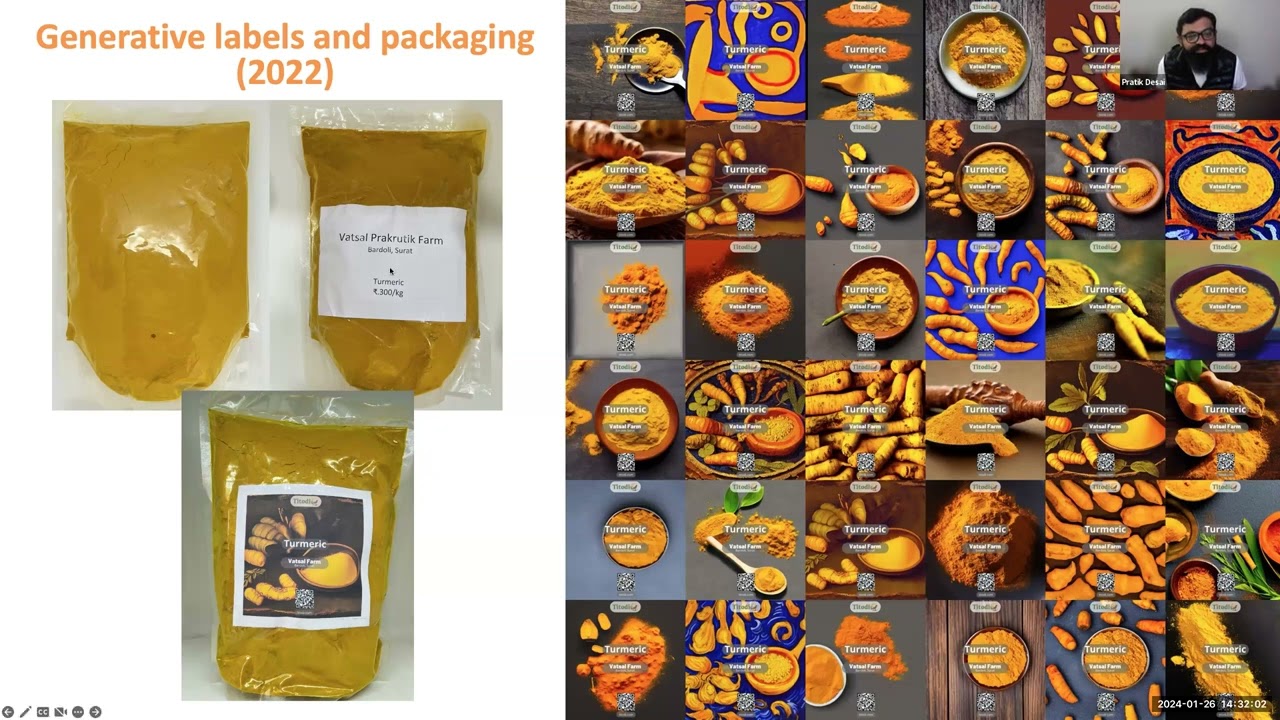
How do you train a language model for a domain that mostly is not on the internet? Pratik spent an hour on that question this week at the AI Institute of South Carolina (AIISC), which invited him to give its Founder Talk. The room was researchers, so the conversation went where researchers take it: corpus, retrieval, evaluation, and what deployment actually means when the user is a smallholder farmer on a budget smartphone and a patchy connection.
The core of what Pratik argued is that the corpus is the hard part. The agriculture content in public language corpora is overwhelmingly written in the agronomist’s voice, not the farmer’s. Most of the work behind Dhenu 1.0 went into assembling and continuously updating a corpus that captures how a grower in Marathwada actually frames a sowing question, in Marathi, using the regional pest vocabulary rather than the Latin names a paper would use. That is also why a generic LLM, however large, falls down at the first follow-up question from a real farmer.
From there he walked through why the retrieval layer has to be a knowledge graph rather than a flat pile of documents. A model retrieving from flat text will hallucinate a brand, recommend a rate outside label, or get a regional ban wrong. One retrieving from a graph keyed to crop, growth stage, pest, agro-climatic zone, and registered active ingredients starts to behave like an extension officer. Building that graph out of messy multilingual sources (public extension publications, product labels, field-team notes) is slow work, and it compounds.
The section I would point an agribusiness listener at is deployment. A large model behind a slow API is unusable for a grower on a patchy 3G connection in Jalgaon; a small model with the right voice layer and a clean escalation path to a human is the entire game, and most of the engineering lives after the model card. An agribusiness evaluating advisory AI for its farmer base should be asking vendors about those layers, not about parameter counts.
The uncomfortable admission in the talk: there is effectively no public benchmark for agricultural language understanding today, so anyone quoting an accuracy number in this space is grading their own homework. That gap needs filling. Until it is, ask vendors how they test, not just what they scored.
The full talk is on the AIISC channel at youtube.com/watch?v=YFIPPKumG4g. It is the research-audience version of the KissanAI story, heavier on corpus and evaluation than on distribution, and the right starting point for anyone coming to us from a model-building background.
Sources
- Bridging Knowledge Gaps in Agriculture with Generative AI: Pratik Desai · AI Institute of South Carolina (AIISC) (1 Mar 2024) Research