What the Bay Area AgTech ecosystem looks like in late 2024
A field journal from the AgTech Alchemy meetup we hosted in October. Who showed up, what they are working on, where the conversation is going, and why a small Bay Area community of agritech founders and funders is starting to matter.
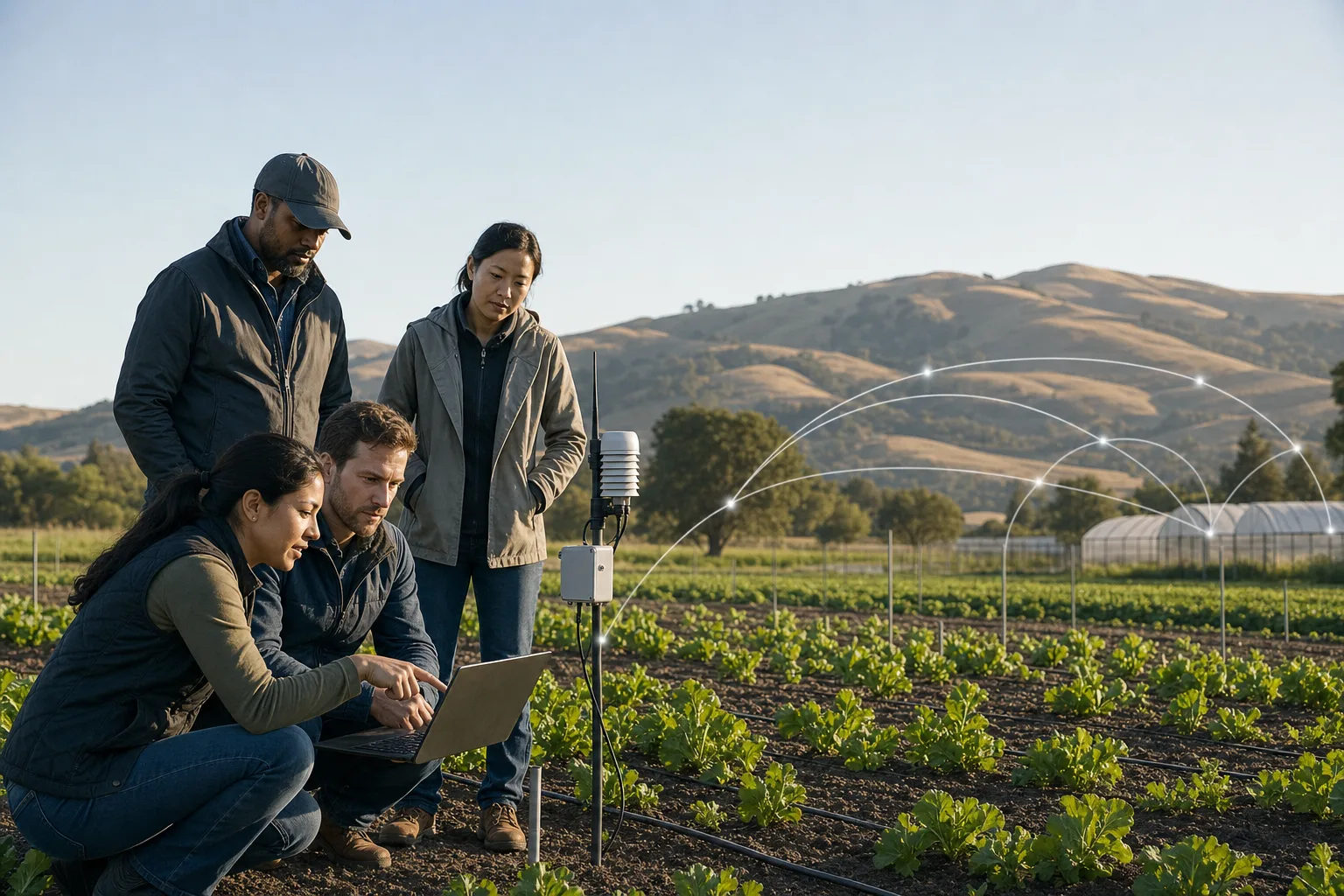
We hosted a small gathering on the Bay Area AgTech ecosystem this week. Rhishi Pethe, Sachi Desai, and I called it AgTech Alchemy. The framing is simple: an agriculture problem, an AgTech innovation, and some capital combine, and occasionally a great startup gets created. We get together, the operators talk to the funders, the startups talk to the operators, and the room sees who is doing what.
This is a field journal of what I saw. It is going up the way I’d write it in a notebook, not the way I’d write it for a venture report.
The room
About 80 people. Mix of founders, mentors, investors, and operators from agribusinesses. Mostly Bay Area, a handful from Davis, a few in town from Seattle and Salinas. The energy in the room was different from a tech-only event in a useful way. People talked about specific crops, specific regions, specific failure modes. Less posturing.
Startups who got up to share what they’re working on (2-4 minutes each, no slides):
Bountiful (Megan Nunes, Michael Bertino): produce growing and post-harvest with computer vision. Megan’s framing was the right one for this room: the value is not the vision model, it’s what the model lets a packing operation do differently.
Nighthawk (Lawrence Ibarria): autonomous drones for nighttime field tasks. The pitch was tight. The question that kept coming up in the audience was the regulatory shape; Lawrence is patient with the FAA work.
KissanAI: we are not new to anyone in this room but I shared where we are. Voice-first AI advisory at deployment scale in India, expanding the platform shape, and the AI Alliance membership we announced last month. A few people came up after about the platform layer specifically: agribusinesses want a productised AI, not a custom-built one, and that shape is starting to register.
Spectacular Labs (Arthur Montazeri): gene therapy adjacent. Outside the typical ag stack but the room engaged hard. The interesting question is whether biology innovations like this can find an extension model that gets them to growers fast enough.
TRIC Robotics (Adam Stager): UV-C light for strawberry pest management. Specific, deployable, working. The kind of robotic application that is more boring than the autonomous-tractor narrative but actually shipping.
Emergent (Mike Roudi): undisclosed stealth-ish. The conversations afterward were the substantive part.
Glean (Erica Bliss): live-named on stage. Glean is rolling up data flows across an agribusiness’s existing stack. The interesting wedge.
What I came away thinking
A few patterns from the conversations.
The “AI in agriculture” frame is too broad. The room had at least four distinct categories of company doing something AI-shaped, and they share less than the umbrella term suggests. Foundation-model fine-tuning for agronomy (us). Vision systems for produce. Robotic and drone autonomy. Software-with-LLMs sitting on top of existing operations stacks. These are different businesses with different operating models, different customer profiles, different capital intensities. Lumping them under “AgTech AI” misleads investors and buyers both.
Deployment moats are real and underappreciated. The conversations about who has reached production and who hasn’t surfaced the same pattern: it is the teams who have done years of unglamorous operational work that are getting deployed, not the teams with the cleanest pitch deck. The investors in the room (without naming names) were starting to articulate this: “I keep funding teams who can pitch and watching them stall at deployment; I’m looking now for teams who can deploy.”
The valley-to-grower gap is closing, slowly. Five years ago, Bay Area agtech was largely disconnected from the farms it was building for. That is changing. More founders in the room have actually spent time on farms. More farms have working AI deployments to compare notes on. The feedback loop is still weak but it exists, and AgTech Alchemy is one of the threads pulling it tighter.
Smallholder versus large-scale is the cleavage line. The North American room mostly builds for the large-scale producer. The Indian and Southeast Asian context is the smallholder. The economics, the device targets, the language requirements, the price points are different. The two sides of that line do not always realise how much they cannot reuse from each other.
Where we go from here
Per Rhishi’s announcement at the close, here is what happens next.
There will be more in-person meetups. The next one is at Woodland on October 24 alongside FIRA USA, with details going out on the AgTech Alchemy email list. We are aiming for a regular cadence so the room has a chance to develop continuity rather than being a one-off.
There is now a Slack community connecting the live events. Email agtechalchemy@gmail.com for an invite if you are working in agritech and want to follow the conversation between meetups.
The community will keep being multi-disciplinary by design. The point is the alchemy of agriculture problem plus innovation plus capital, and AI is only one of the inputs.
Thanks to everyone who showed up, and to Rhishi and Sachi for co-hosting. See you at Woodland.
Sources
- AgTech Alchemy · AgTech Alchemy Industry