Field memory: where agent memory meets the real world
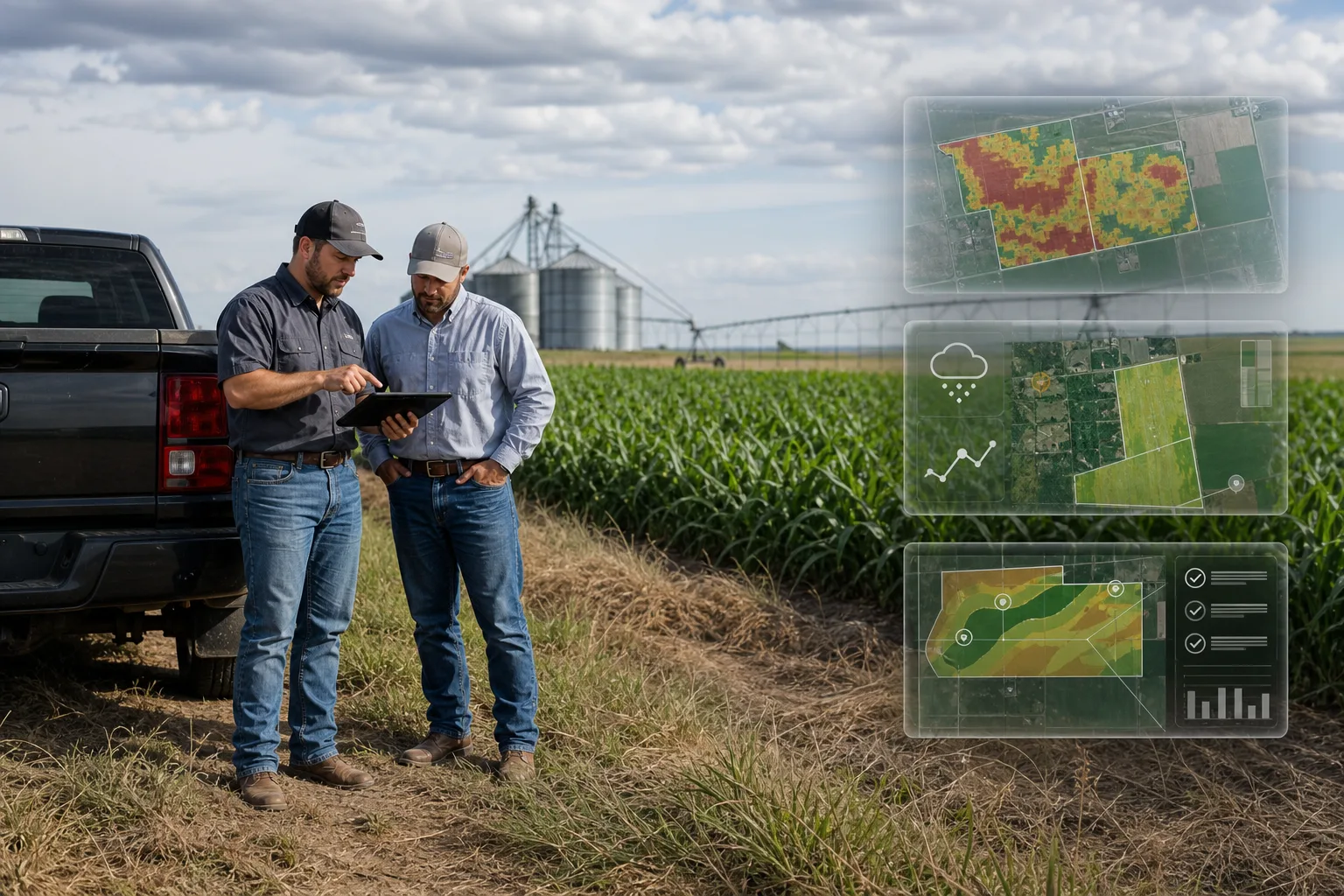
Field Memory is meant for the messy reality of US agriculture: years of field history, scouting photos, recommendations, product evidence, and grower follow-through spread across people and software.
The phrase “AI memory” has become oddly small. In most products it means the model remembers what you said ten minutes ago, or that you prefer short answers.
Useful, sure. It barely dents the problem facing a crop advisor who inherits an account with five years of field history spread across three systems and two former employees’ phones.
While shaping FieldFoundry, I keep coming back to a different question: what would it take for the field itself to have a memory? US agriculture is organized around fields, crop years, scouting visits, recommendations and applications. A chat session is only one small piece of that work. The person taking a grower’s call in July may never have seen the photo a seasonal scout took in June.
Start with North 80
Consider a composite Midwestern example. A retail agronomy team works with a corn and soybean operation. One field is known as North 80. A low area along the east side stays wet after heavy rain, and the team has several years of soil tests, planting records, as-applied data, scouting photos, weather, imagery and yield-monitor files.
After a humid stretch, a scout photographs leaf lesions in the corn. The photo matters, but it doesn’t answer much on its own. Has this shown up during an earlier corn year? Was it in the same wet area? Which hybrid is planted there now, and when did it go in? Did the team make a recommendation last time? More importantly, did the grower follow it, and what happened afterward?
Somebody can probably find each answer. One may be in the precision-ag platform. Another is sitting in a camera roll or text thread. Product information lives in a PDF, while the useful bit of history may still be in the head of the rep who changed territories last winter. By the time the pieces are assembled, the grower’s question is no longer a quick one.
For North 80, memory is the trail connecting the field to its previous crop years, the scout’s current observation, the evidence behind a recommendation and the action taken afterward. That trail should still make sense when a different person opens the account next season.
This is where I think a lot of software gets too tidy. A field record needs to preserve the awkward details that a clean summary washes away. The hybrid changed. Planting ran late. The symptoms appeared first near the wet edge. An application was recommended, but weather delayed it. Those details are often where the useful pattern sits.
Photos and scouting notes also need a place and time. A lesion photo is more useful when it is tied to the correct field, crop stage and recent weather, with earlier observations from that part of the field close by. Otherwise it is just another image in a folder.
Product evidence belongs in the same working view. An advisor may need the current label, active ingredient, use restrictions and supporting agronomic information before sending anything to a grower. FieldFoundry can collect and organize that material. The AI prepares a draft; the advisor reviews it, and the current product label governs use.
Then there is the part most systems lose: what actually happened. A recommendation without follow-through becomes a dead-end note. The next person needs to know what the grower chose, what was applied and what the team saw later.
This gets messy quickly in a US operation. One grower account may cover several farms, landlords and field boundaries. North 80 might also have a farm name and an identifier from another platform. Field identity sounds like a boring database problem until somebody attaches a scout photo to the wrong North 80. Seasonal scouts, advisors, applicators and account managers each add a different piece. Soil-test PDFs do not look like yield-monitor exports, and neither looks like a text from the grower.
And yes, permissions are part of the agronomy workflow. Yield information, input decisions and grower conversations are commercially sensitive. A retail branch should not automatically see every field in the company. A grower relationship should not become open data because somebody added an AI tool. Access has to follow the way the team actually works.
What we are building into FieldFoundry
We call FieldFoundry an AI command center for modern ag teams. Field Memory sits underneath its Agronomy Agent. A scout starts by attaching an observation or photo to the correct field. That field link is important. From there, the system can bring in the relevant season history, weather, imagery and earlier scouting, gather the agronomic and product evidence, and prepare a recommendation for an advisor to review.
Once the advisor is comfortable with it, the team can share a grower-ready summary and record the follow-through. That last step feeds the next visit instead of disappearing into another message thread.
The immediate win is fairly ordinary: less hunting around before answering a grower. It also makes account handoffs less painful for a retail team. On a large operation, the manager can still see why a decision was made even when a seasonal employee collected the first observation.
I think of it as a field book that keeps working after the person who wrote the first entry has moved on. It has to show its sources, keep crop years separate and leave the agronomic decision with the people responsible for making it.
When someone opens North 80 next July, they should be able to find the lesion photo, the weather that came before it, the recommendation and what the grower actually did. If that still takes three phone calls and half an afternoon, the field still has no memory.
Sources
- FieldFoundry · KissanAI KissanAI