Five days at the India AI Impact Summit
We launched Dhenu Platform at Bharat Mandapam last week. The conversations that followed shifted how we think about the next 12 months. A team reflection on what we saw, who we met, and what the response from the IndiaAI community is telling us about agentic AI for agriculture.
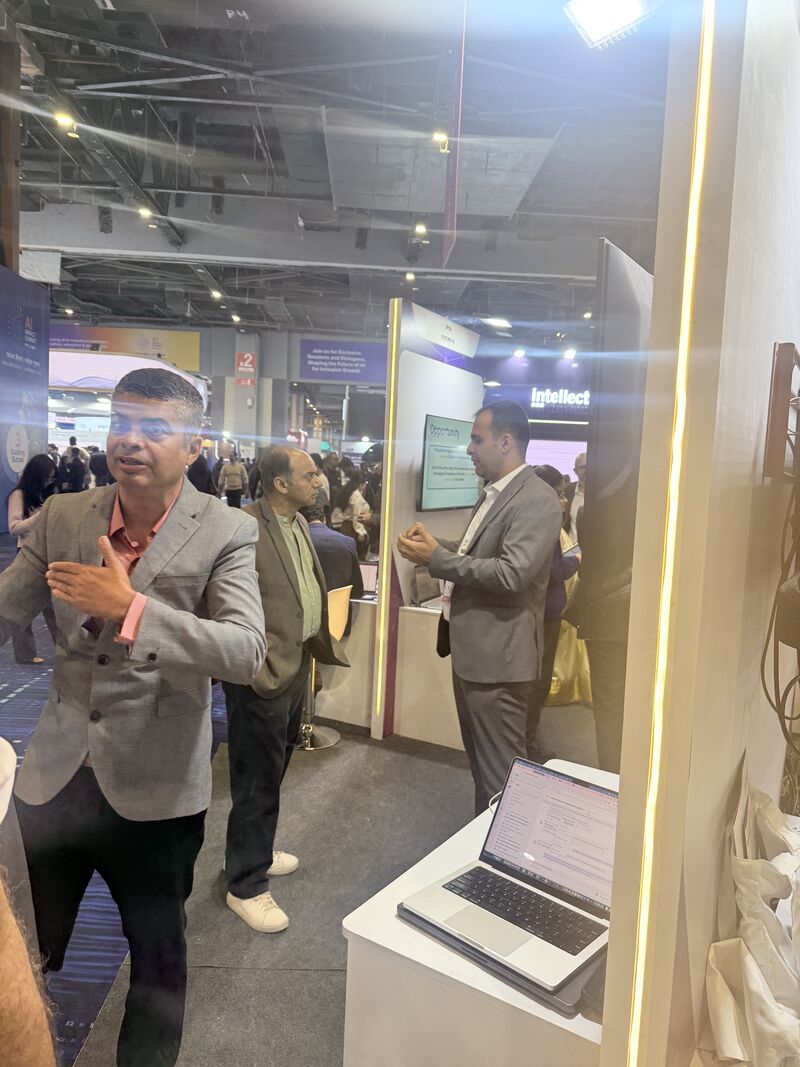
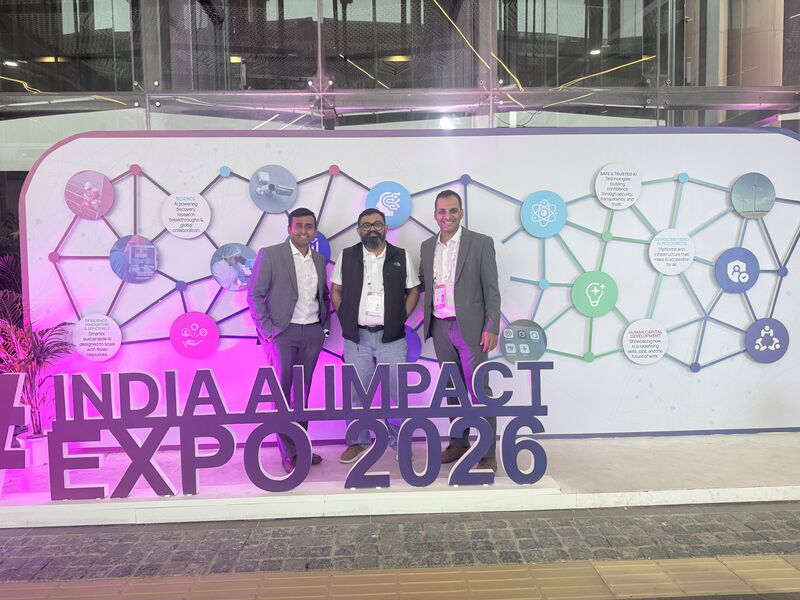
We are back from five days at Bharat Mandapam. The India AI Impact Summit 2026 is the largest gathering the IndiaAI Mission has organised so far, and the scale of it took a moment to absorb. Halls full of working systems, a working AI corridor that took half a day to walk through end to end, government, industry, and academia in the same conversations, and the recurring theme of the Summit running through every room: AI for People, Planet and Progress.
We were there to launch Dhenu Platform. We are leaving with a clearer picture of what to build next.
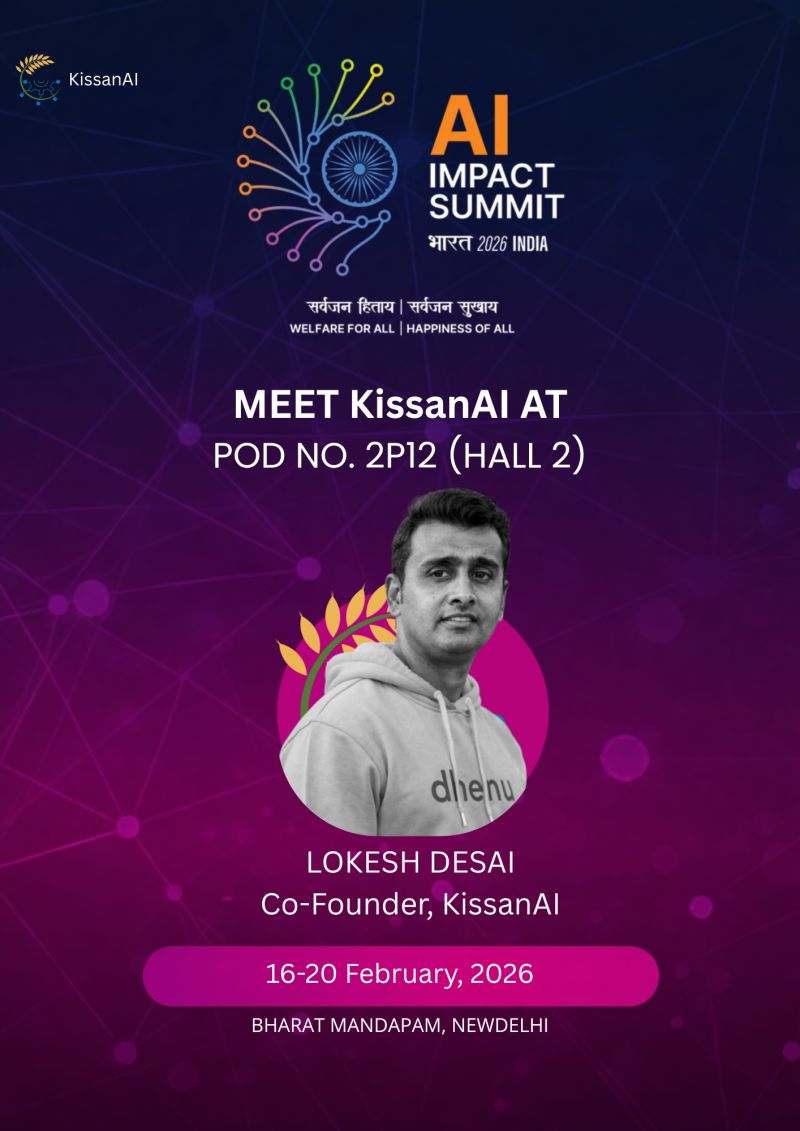
Pod 2P12, Hall 2
Dhenu Platform went live at the Summit on day one. We took the team to Pod 2P12 in Hall 2 and set up to do live demos from the morning of the 16th. The product is at dhenu.ai and the launch post is here for the technical breakdown.
The surprise was less what we showed than what we kept getting asked.
The questions at the booth
Across five days, the pattern of conversation was unusually consistent. Policymakers asking how the platform would scale to a state government’s farmer outreach. Large agribusinesses asking about deploying a sales-and-discovery agent to their existing distributor network in three months instead of three years. Mid-sized agri MSMEs, often family-run, asking whether they could afford to run a Dhenu agent on their own modest catalogue. AI builders and developers asking whether the platform’s APIs were open enough to layer their own workflows on top.
These are different questions from different rooms. They all tested the bet we had quietly made over the past year: agentic AI for agriculture has to be usable by smaller agribusinesses, state agencies, and developers, not only by a few large enterprises. They need to be able to point the platform at their own data and have something working in days.
And what people responded to, again and again, was the collapse in the path from “we want this” to “we have this in production”: from twelve months to one week.
Watching the bet get tested
We have been building this platform layer for two years, and the launch post from the week before makes the underlying argument in full: across our deployments, the model was rarely the bottleneck, the path from a working model to a deployed service was. The Summit was the first time we watched that argument get tested by a room rather than by our customer pipeline.
It held up. Multiple state innovation arms wanted to talk about deploying farmer-facing agents on top of their existing 1551-style helplines. Agribusiness leaders we had not previously talked to walked up to ask what it would take to give every retailer in their network a Dhenu agent on day one. Developers wanted access to the API layer so they could build new agents on top of the same agronomy backbone.
Agriculture and the rural MSME economy have been waiting for an AI layer that does not require a data-science team and a six-month consultancy engagement. The response at the Summit suggests that wait is ending faster than we projected.
On the Summit itself
A few observations from the floor are worth recording, in the order they happened in our heads.
Government and startup co-presence actually worked. The Summit had genuine policy presence and genuine builder presence in the same physical space, which is harder to design than it sounds. The IndiaAI Mission team and the Ministry of Electronics and Information Technology team pulled it off.
The “AI for People, Planet and Progress” framing held up too. Themes at trade shows are usually wallpaper. This one was load-bearing. The conversations about responsible scale, energy footprint, and inclusion in regional languages were not relegated to a panel track. They came up on the floor, at the booth, in the side-conversations.
The expo was inaugurated by the Prime Minister on day one; we were at our pod in Hall 2 like everyone else, heads down in demos.
And the international participation was real. We had focused conversations with delegations from Japan, the Gulf, and a handful of African and Southeast Asian governments. The export thesis for Indian agricultural AI is not theoretical anymore.
What changed for us
The clearest change is the platform’s economic positioning. We are going to lead with the lower-cost on-ramp for MSMEs and developers, not the enterprise deployment. The enterprise demand will come anyway. The MSME demand is the part the market is structurally underserving, and it is the part the platform can serve cheaply at scale. We will write about pricing separately, but the direction of travel is clear.
The partnership list changed too. We left the Summit with more policy and ecosystem partnerships to evaluate than we had walked in with, and the right ones for the next six months are the ones that let Dhenu touch the largest farmer base at the lowest unit cost, not necessarily the ones with the biggest logos.
Then there is the cadence. The Summit reminded us that agricultural AI in India runs less like a quiet B2B sale and more like a public conversation, and we have to participate at the pace that conversation runs. That changes how often we write, how openly we share what is working and what is not, and how much of the work we put behind the paywall versus in the open.
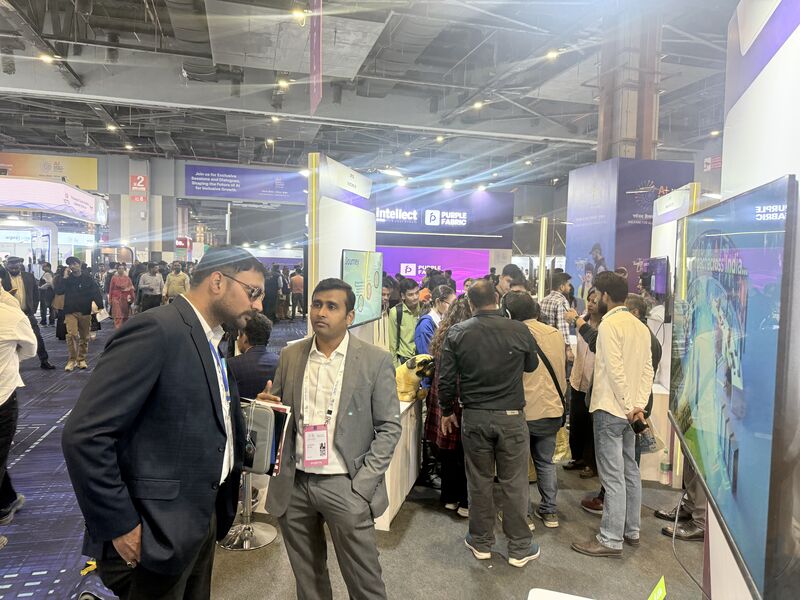
Five days on the floor
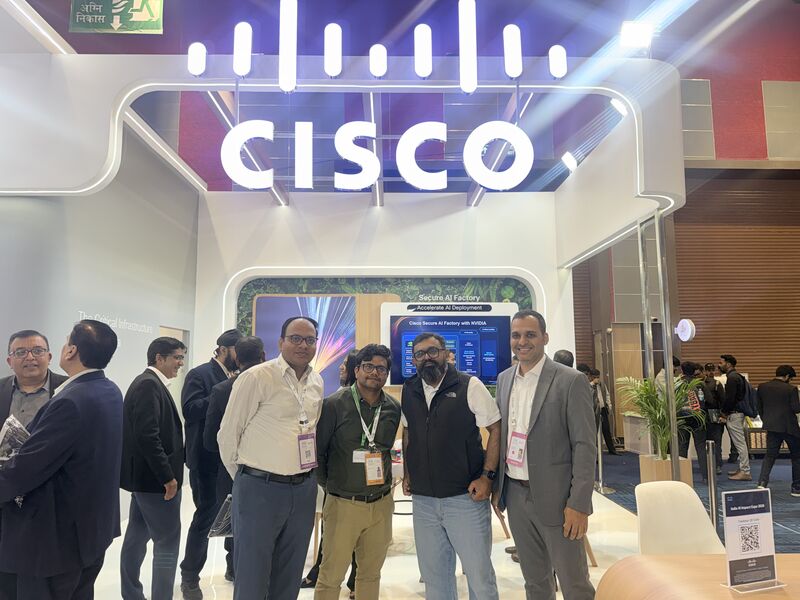
A particular thank-you to Pratik and Lokesh for the five days on the floor with me. Back-to-back conversations from morning to closing every day. Demos, deep dives, partnership intros, regional-language follow-ups, late-night recap calls back to the engineering team in Surat and Santa Clara. It takes grit to show up with the same clarity at hour ten as at hour one. They did.
A thank-you also to Sachi, Ryan, and the AgTech Alchemy circle for the strategic conversations that turned several walk-ins into meaningful follow-ups.
Back in the office
We returned without a stack of signed contracts. A booth at a summit is not where those contracts get finished. What we did get was a much clearer list of who wants the platform, what they can afford, and which parts still create friction.
The path to scale runs through MSMEs and state-level operators as well as global agribusinesses. The price floor needs to come down further, and the partnerships that matter most are the ones that extend reach rather than simply add a logo.
We are early in the build. There are model improvements to ship, agents to harden, languages to expand, and a vision and image stack to tune for the long tail of regional crops and pests. The next twelve months are about converting the response we received at the Summit into deployed systems that quietly serve millions of farmers without the farmer ever needing to know what is running underneath.
If you stopped by Pod 2P12 in Hall 2, thank you. If you did not, the platform is at dhenu.ai and the early-access waitlist is open. The team is back in Surat now, working through the follow-up list.
Sources
- India AI Impact Summit 2026 · IndiaAI / Ministry of Electronics and Information Technology Government
- Dhenu Platform · KissanAI KissanAI