A Maharashtra farmer's harvest with AI
An Economic Times feature profiled a Maharashtra farmer using KissanAI advisory for a full crop cycle. Numbers, not narrative. What changed in input cost, what changed in yield, and what the farmer told the reporter about how trust was built.
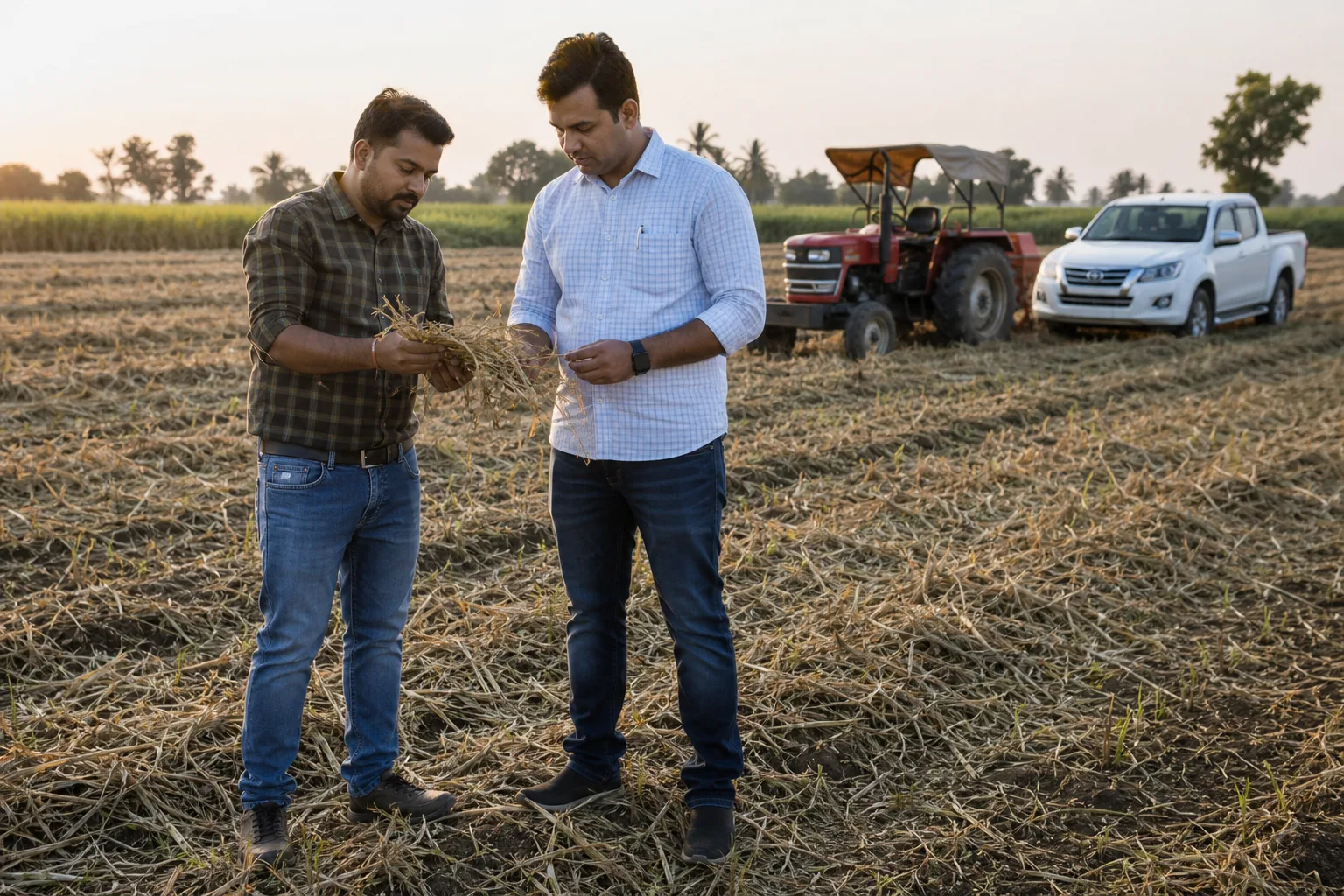
The Economic Times this week ran a feature on a farmer in Maharashtra who has been using KissanAI’s advisory service across a full crop cycle. We’re not naming the farmer here because the piece does and we want to respect their privacy beyond the press appearance, but if you read the article you have the specifics. What I want to do in this post is share the numbers that come out of a real deployment: not the marketing arc, just what changed for the grower and what the grower himself said about why he started trusting the tool.
The headline result, in the farmer’s own words to the reporter, was a 25% reduction in input costs and a yield comparable to or slightly higher than the previous season’s. Those numbers are the kind of thing we are cautious about in our own marketing, because every farm is different, every season is different, and one farmer’s experience is not a controlled trial. The reason to surface them anyway is that they are independent reporting from a journalist who walked the field, not a number we generated.
A few specifics from the piece worth pulling out.
The input optimisation came mostly from pesticide and fertiliser timing rather than volume. The farmer didn’t dramatically cut what he was applying. He shifted when. The AI advisory recommended delaying the first fungicide spray by ten days based on the local weather pattern and growth stage. Skipping an early spray that was happening prophylactically, rather than against an actual symptom, saved one application and probably saved more by reducing the early-season chemistry pressure on beneficial insects. This is the kind of timing call that an experienced agronomist would make instinctively. The AI made it consistently across the season.
Trust was built on the small things first. The bigger decisions (when to sow, what variety to choose) came later. The earliest interactions were on smaller questions: “is this leaf colour normal for this stage,” “should I irrigate before the forecast rain or wait.” The agent answered these in the farmer’s Marathi, with context that reflected his specific district. After about six weeks of getting small things right, the bigger decisions felt safer to defer to the system. This is the trust-building arc we see across deployments. It takes weeks, not days.
The voice interface mattered, too. The farmer told the reporter he would not have used a typing interface. He was comfortable on WhatsApp voice notes. The agent listened, replied in voice, and the conversation felt like talking to an extension officer who answered on the first call. This is consistent with what we see in our query logs more broadly: voice queries outnumber text queries about three to one across our smallholder deployments.
And the crop was cotton in Vidarbha, one of the hardest crops in one of the hardest regions to advise on. Rainfall is erratic, the pest pressure (especially pink bollworm) is brutal, the input cost burden on the farmer is heavy, and the price volatility at the back end means a marginal yield gain has outsized financial impact. If the AI advisory helps in cotton in Vidarbha, it will help in a lot of other places too.
There is a temptation in our position to amplify this story heavily, and it should be resisted: one farmer in one season is the start of a body of evidence, not a conclusion. We are working with the AI AgriBench consortium and with state extension partners on the larger-scale studies that would let us make stronger claims. Those take a year or more to design and run. The Economic Times piece is one farmer’s story; the consortium evaluation is the long-form follow-up.
What stayed with me was how ordinary the changes were. The farmer continued to grow cotton and use chemistry. He made better calls about timing and selection. There was no radical new farming system hiding behind the result.
The other lesson is about how the trust gap closes: through small wins in the farmer’s own conditions. Pitches that lead with “10x productivity” or “revolution” land badly with the actual user. Pitches that say “I’ll help you make small decisions correctly, in your language, every day” land well.
The Economic Times piece, “AI Rich Harvest,” carries the identifying details we have deliberately not repeated here. Read the reporter’s account for those. One documented season does not prove a general outcome, but it gives us a concrete case to test against the larger studies now being designed.
Sources
- AI Rich Harvest: Maharashtra farmer cuts costs · The Economic Times (10 Apr 2025) News