Writing on the Wall: How Overlooked Data Can Fortify Legacy Industries
A line of graffiti in Pompeii survived two thousand years of weather, war, and volcanic ash. Most enterprise data does not get that lucky. Agentic AI is the steward that finally takes those trivial signals seriously.
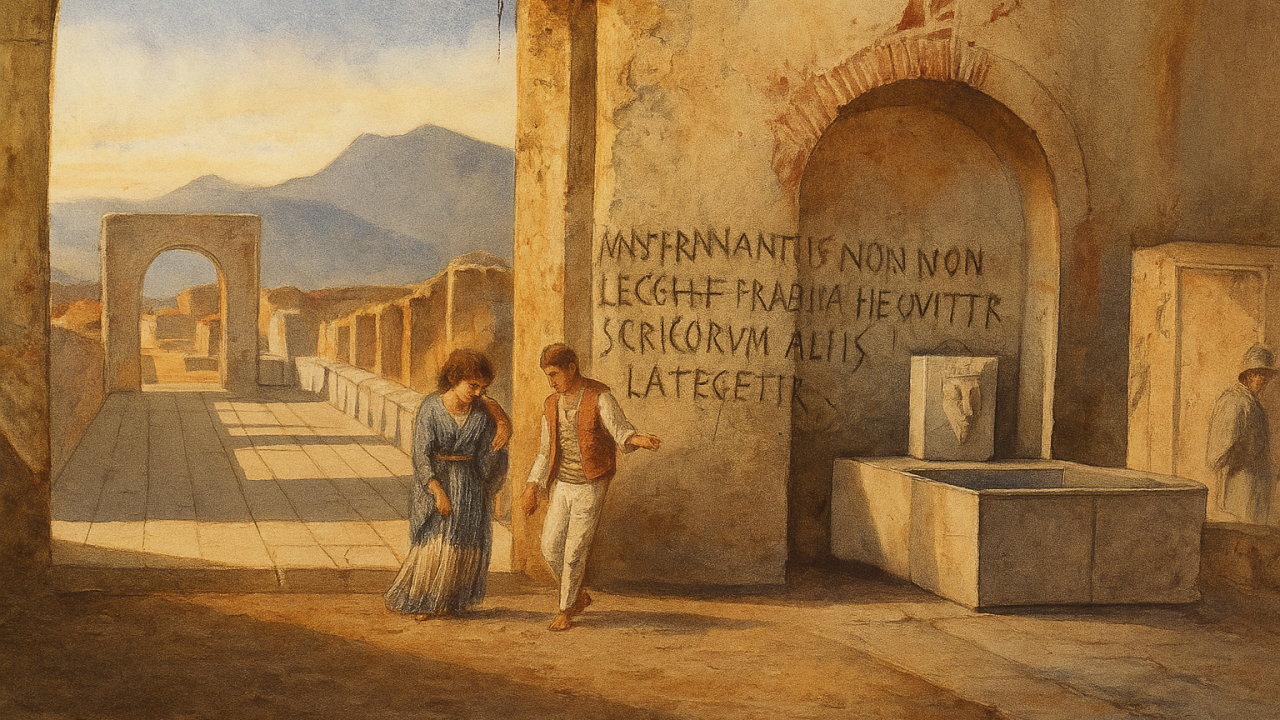
Lessons from Pompeii’s Walls
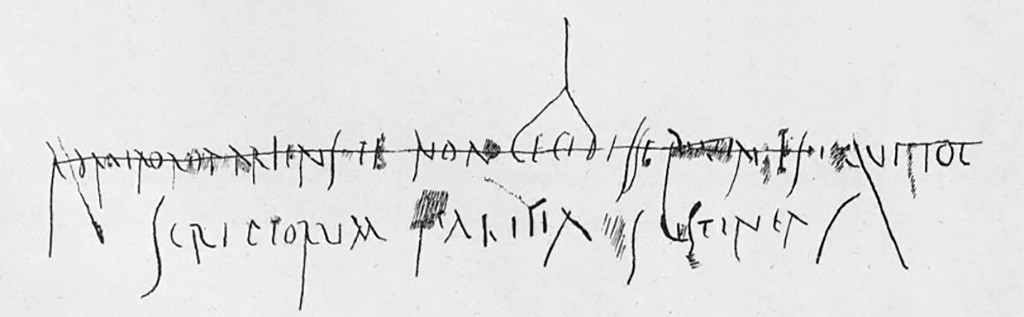
A line scratched into Pompeii’s civic walls nearly two millennia ago reads: “O walls, you have held up so much tedious graffiti that I am amazed that you have not already collapsed in ruin.” This wry complaint, etched by an unknown hand, endured both daily abrasion and the volcanic ash that buried the city. Ironically, the wall proved resilient: it survived not just the formal structures of Pompeii but also the onslaught of “tedious” scribbles. The survival of these trivial signals, such as graffiti, offers a powerful analogy for today’s legacy industries. Like Pompeii’s walls, decades-old infrastructures in agriculture, food processing, and heavy industry have stood the test of time. They’re robust against physical wear, yet now face an onslaught of a different kind: rising volatility and information overload.
Modern legacy sectors are under pressure from all sides. In agriculture and manufacturing, climate shocks and supply swings make operating conditions more erratic than ever. A single drought or flood can upend crop yields and input prices. Labor scarcity adds another constraint; one estimate suggests that more than 2 million manufacturing roles could go unfilled by 2030. At the same time, operations are awash in data. Farms and factories bristle with sensors, maintenance crews log detailed notes, and teams communicate through endless text threads and radio chatter. An estimated 90% of collected industrial data goes unused. That leaves a trove of potential insight sitting unread, much like graffiti that no one bothers to examine.
Market leaders have responded by investing in precision tools and digital platforms, hoping to tame volatility with IoT dashboards and analytics. The next useful layer is more granular: the peripheral, informal, or unstructured signals that institutions traditionally overlook. These include a sensor anomaly that did not trigger an alert, a veteran operator’s aside about an odd vibration, a field note about pests, or a technicians’ chat about a workaround. Individually, each signal seems trivial. Collectively, they can warn of emerging issues or reveal opportunities that top-down systems miss. Legacy companies often preserve these traces in logs, emails, and memories without using them in day-to-day decisions. Agentic systems offer one practical way to make that material usable without handing people another dashboard to watch.
Agentic AI: Listening to the “Graffiti”
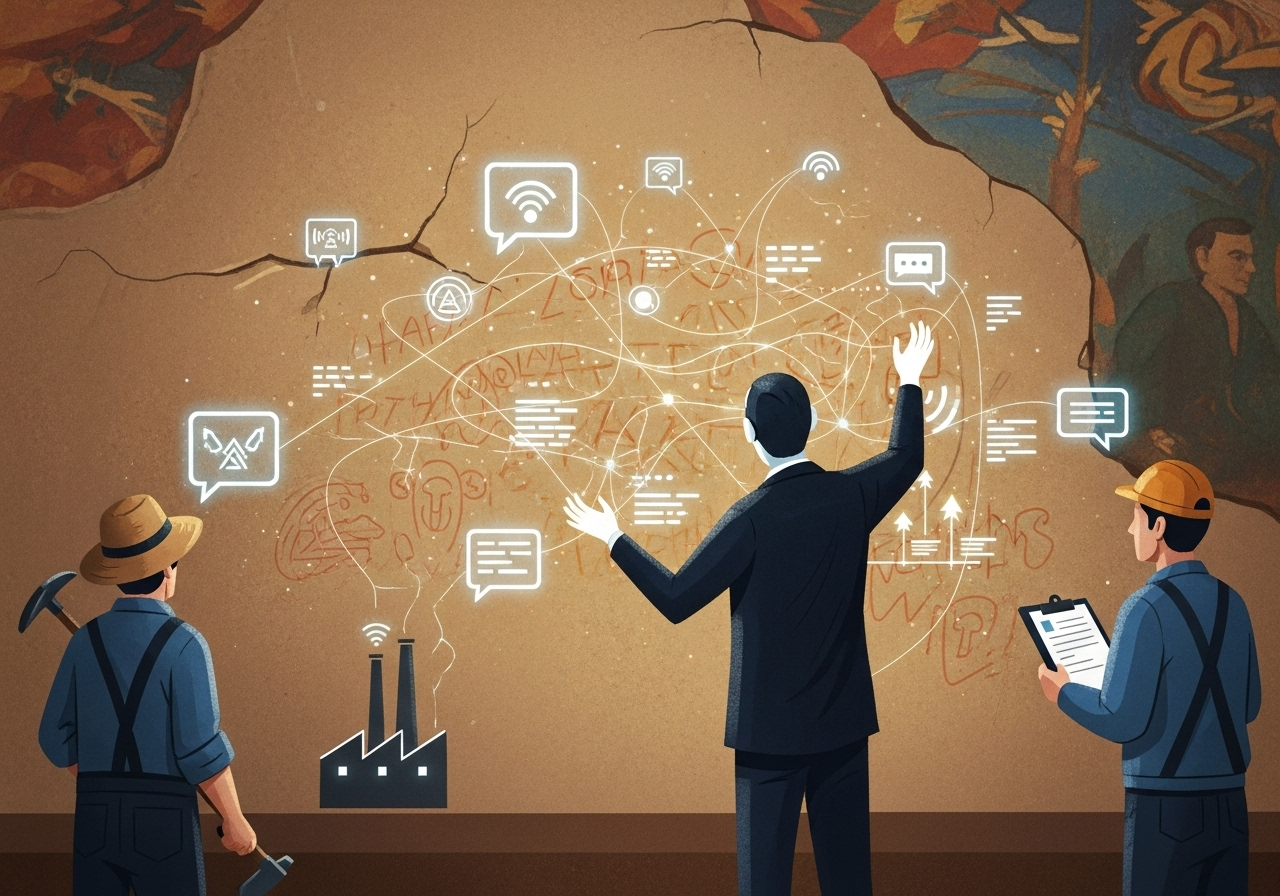
Agentic AI describes systems that can triage, summarize, and act on information without waiting for a fresh prompt at every step. A useful version behaves like a diligent junior colleague: it monitors several data streams, interprets context, and takes initiative within bounded authority. Its observations and actions should be logged so operators can inspect the evidence, challenge a recommendation, and verify the outcome.
This makes agentic AI an ideal steward for the “graffiti layer” of legacy operations. Just as a skilled curator might catalog and interpret centuries of graffiti on an old wall, an AI agent can tirelessly sift through the daily torrent of sensor pings, log entries, and message threads. It can filter noise, spot patterns, and surface pertinent knowledge to human decision-makers in real time. Importantly, it can do so without disrupting hard-won practices on the ground. The goal is not to replace the farmer, factory foreman, or maintenance engineer. Rather, it’s to give them a new tool, a kind of ever-alert co-pilot, that catches the weak signals they don’t have time to monitor and gently augments their intuition with data-driven insight.
In practical terms, an agentic AI might autonomously handle tasks like: monitoring soil sensor feeds and weather updates overnight, then suggesting an irrigation tweak at dawn; reading through hundreds of maintenance tickets across a fleet of machines to flag which pattern of warnings predicts a breakdown; or summarizing a week’s worth of team chatter to highlight three minor issues that kept recurring. These systems plan and execute such multi-step analysis on their own, only escalating to humans when a decision or intervention is needed. Because they are adaptable and goal-driven, they improve with feedback, learning the operator’s priorities and the nuances of each environment over time. In short, they act as careful guardians of all the “tedious” details, ensuring important traces don’t fall through the cracks. The following examples illustrate how this works in practice, from the field to the factory floor.
From Field to Factory: Agentic AI in Action
AI Advisors for Farmers
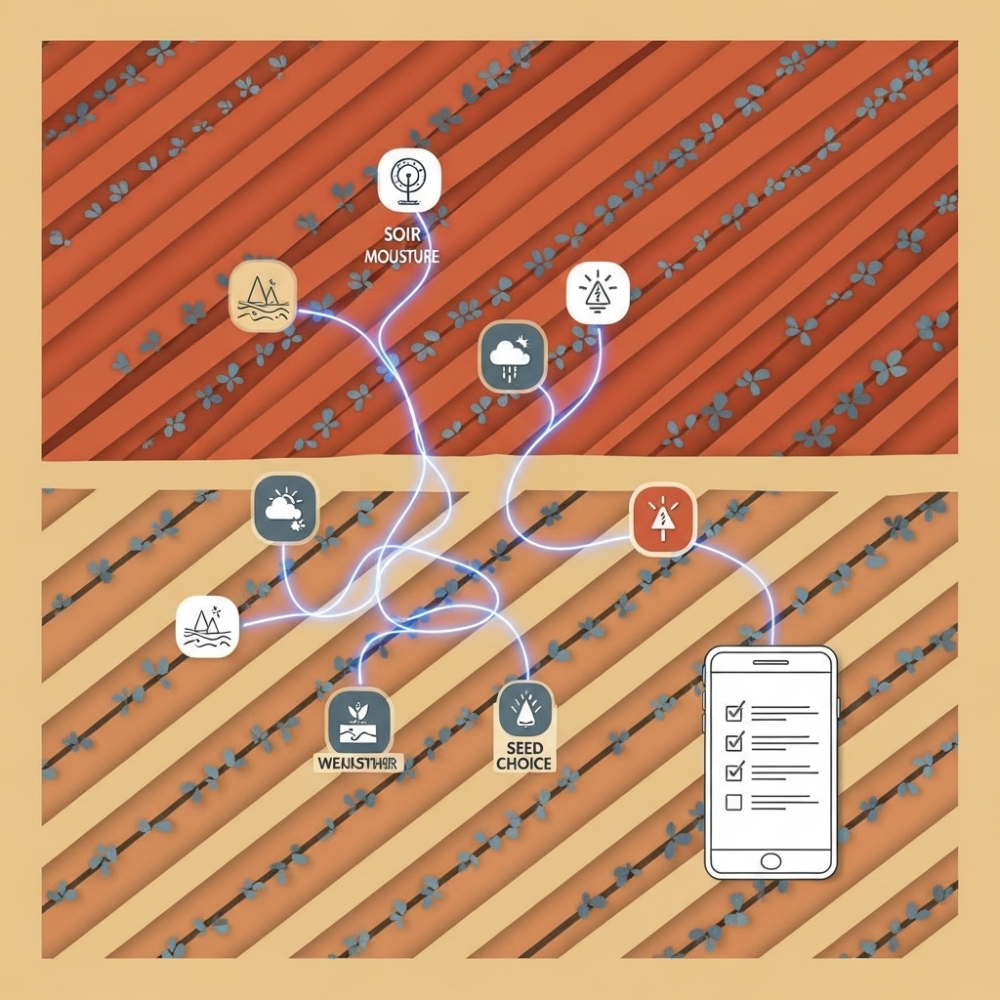
Imagine a farming community where, each day, dozens of small signals could mean the difference between a healthy crop and a lost harvest. A patch of wilt on a single leaf, a snippet of market news about fertilizer prices, an offhand remark by a neighbor about unusual insect sightings, these are the kinds of grassroots details that often stay local and analog. Traditionally, a farmer might rely on personal experience or an overburdened extension officer to make sense of it all. In 2023, during the breakout of generative AI, KissanAI introduced the Farmer’s Co-Pilot, one of the earliest widely adopted AI assistants for farmers. It delivered practical, fast answers to everyday questions in natural language, with support for local dialects and voice, and it quickly gained traction across farming communities. Building on that momentum, KissanAI, working with IndiaAI, is now evolving the Co-Pilot into the agentic “Kissan Agent.” This next step moves beyond single-question Q&A to continuous, goal-directed assistance: aggregating agronomy advisories with weather nowcasts and seasonal outlooks, market-price analysis, and local context (soil, crop stage, nearby pest signals). As deployments expand with agribusinesses and Fortune 500 partners, KissanAI’s approach keeps the human expertise front and center, but lets an always-on agent do the tedious cross-referencing across trusted and curated sources.
The power of such a system is its ability to personalize and contextualize advice. Farmers can pose questions in their native language, even verbally, and receive guidance in real time. The agent triages the farmer’s goal (e.g., “maximize net income this week” or “contain an emerging pest”), plans multi-step checks across trusted sources, and returns concise recommendations with citations and an audit trail, so extension workers and lead farmers can verify or adjust as needed. Early deployments show extension workers using the chatbot to get faster recommendations for farmers, acting as a verification layer to catch any AI mistakes. This collaborative use, AI providing a draft answer, a human expert validating it, exemplifies how agentic AI can elevate frontline expertise. It’s not telling a seasoned farmer anything they couldn’t eventually find out; it’s just doing the tedious digging and cross-referencing much faster. In effect, the AI is amplifying the “graffiti” of farming (all those local insights and data points) into a readily accessible advisory, helping even small-scale farmers make more informed decisions on planting, irrigation, and sales. As climate variability increases, such nimble advisory systems become a resilience multiplier for rural communities.
Crop Protection Co-Pilots
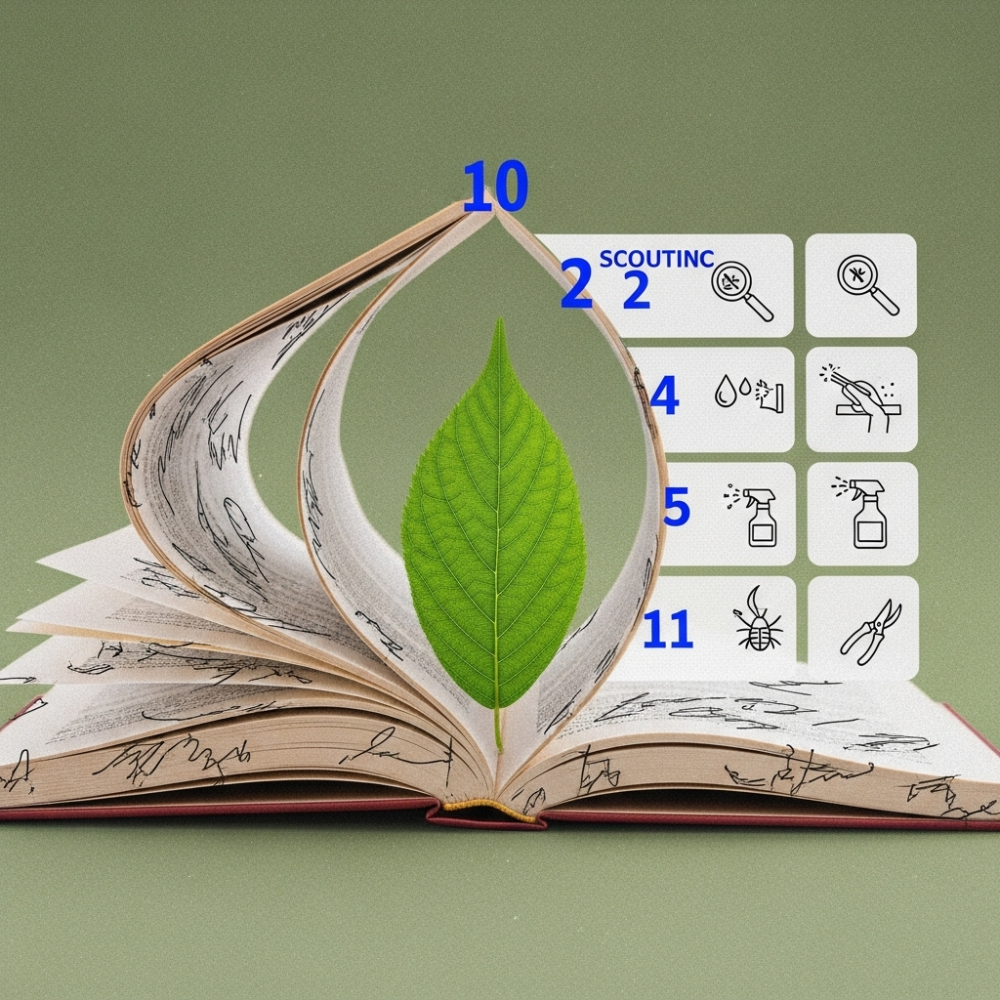
Crop protection is another domain ripe for agentic AI, where the “graffiti” takes the form of subtle biological and textual cues. Consider the task of diagnosing and managing crop diseases. Farmers and agronomists have guidebooks full of pest and disease descriptions, often hundreds of pages of Latin names, symptoms, and treatments, essentially a library of wisdom that can be overwhelming to search in a crisis. Meanwhile, in the field, there are real-time signals: a smartphone photo of a spotted leaf, a sudden change in humidity, a note in a farming forum about blight in a neighboring county. An agentic AI crop protector acts as a co-pilot by fusing these sources into a quick diagnosis and action plan. KissanAI has spent the past several years systematically collecting and normalizing crop-protection labels across vendors, linking them with public agronomy data from extension manuals and research bulletins, and training large language models that can reason over this corpus with retrieval-augmented generation. On top of this foundation, KissanAI has built the Crop Protection Agent, a co-pilot for agronomists, retail advisors, and growers.
In practice, the system can take a farmer’s field observation, whether a short description of symptoms or an uploaded image, and interpret likely disease or pest pressures. From there, it retrieves the exact label passages and agronomic guidance relevant to the crop, growth stage, and target organism. The resulting plan can account for rates, seasonal caps, application methods, buffer zones, tank-mix constraints, resistance-group rotations, and local restrictions. It is delivered conversationally, including audio in local dialects, so the user can ask follow-up questions and inspect the underlying guidance.
The value of this co-pilot approach is two-fold. First, it reacts faster than traditional methods, spotting an outbreak in hours instead of weeks and suggesting containment measures before it spreads. Second, it honors heritage knowledge by using the existing validated guidelines (the bulky manuals on the shelf) as its source, rather than improvising a new regime. In other words, the AI agent is acting as a steward of the accumulated knowledge, ensuring the “graffiti” in the margins, those little field observations and niche research findings, are not lost. As a result, even regions without immediate access to agronomists can achieve expert-level crop protection. Over time, as the system learns from each query and outcome (which treatments worked, which diagnoses were confirmed), it becomes an ever more adept guardian of crop resilience, quietly weaving farmers’ day-to-day observations into a stronger safety net against plagues and pests.
KissanAI has been deploying this capability with Fortune 500 partners and major retailer networks, embedding the co-pilot into existing advisory workflows. It gives frontline advisors a faster path from field signals to label text and a compliant action. Product labels and agronomic literature become useful at the moment of need, even when an agronomist cannot be physically present.
Discovering New Drugs and Materials
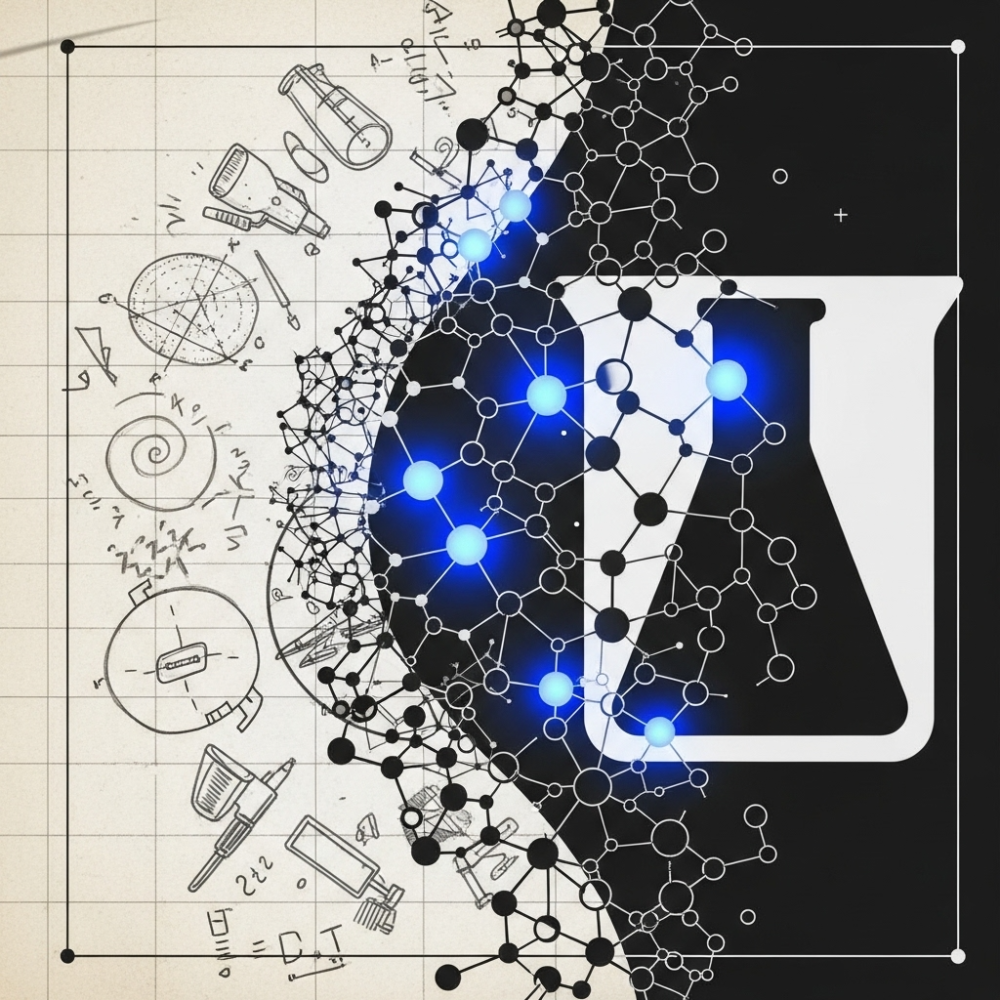
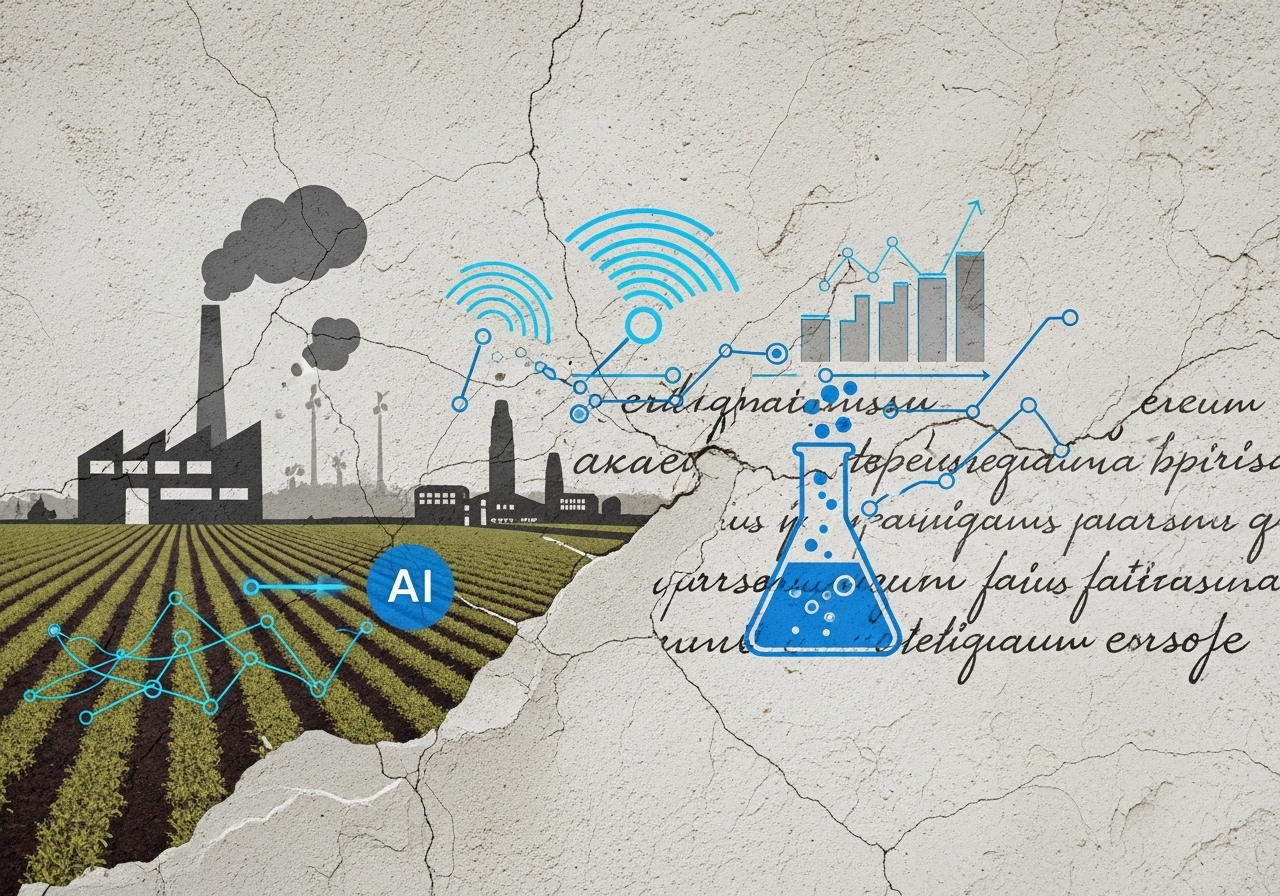
Not all graffiti is written on walls; some is buried in spreadsheets, lab notebooks, and obscure journals. In pharmaceuticals and chemicals, industries as “legacy” as they come, there’s often decades of experimental data and research findings that are only partially connected. A failed experiment here, a surprising side effect there, a compound that was noted in a patent but never pursued, these are the untapped signals that could spark innovation if only they were recognized. Agentic AI systems in R&D labs are now playing the role of tireless research assistants that never overlook a line of data. They comb through enormous libraries of molecules and past results, looking for patterns and candidates that human researchers might miss.
One striking example comes from antibiotic discovery. In 2020, MIT researchers deployed a deep-learning model to scour a digital library of over 100 million chemical molecules in a matter of days, something that would be impossible by traditional screening methods. The AI agent, given the goal to find novel antibacterial substances, identified a compound unlike any existing antibiotic. This molecule, later named halicin, was found to kill several strains of drug-resistant bacteria effectively. It even worked against pathogens for which all known antibiotics had failed. Halicin had been sitting in chemical archives (originally investigated for diabetes), essentially part of the pharmaceutical “graffiti” layer, but it took an AI with the autonomy to sift broadly and the insight to recognize an unorthodox chemical structure to surface its value. As one researcher noted, the AI could explore “large chemical spaces” vastly faster and more cheaply than any lab team, revealing an “amazing molecule” that inaugurates a new class of antibiotics.
This approach is increasingly common: generative AI models propose new drug or material designs by learning the latent “language” of chemistry from millions of known substances. They can suggest a molecule that has never been made, but which their training indicates should have, say, strong antibacterial properties or optimal energy storage capacity. Agentic AI takes it a step further by not just suggesting one-off ideas, but automating parts of the scientific workflow, triaging which leads to follow, running simulations or even robotic experiments, and summarizing findings for the scientists. Importantly, these systems are auditable and collaborative; a chemist can ask the AI why it favored a particular molecule, and it might respond by pointing to a pattern (“it’s similar in shape to these known active drugs, but with a twist that avoids toxicity”). By embracing AI as a partner, legacy pharma and chemical companies transform an overload of data into an accelerated pipeline for discovery. The “graffiti” of past research, those seemingly inconsequential data points and footnotes, becomes the feedstock for breakthroughs, helping the industry become more resilient to challenges like antibiotic resistance or the need for greener materials.
Edge Intelligence on the Factory Floor
On the factory floor or in the mines and oil rigs, resilience often boils down to one key goal: avoid downtime and disasters. Here, the peripheral signals are the creaks, heat fluctuations, minor faults, the machine-equivalent of graffiti that, if read, tell the story of wear and tear. Traditionally, experienced technicians develop a gut feel for this, noticing when a pump sounds “off” or when maintenance logs show a pattern of faults every Friday. But as industrial operations scale and skilled older workers retire, we risk losing that intuitive oversight. This is where edge AI agents have begun to prove their worth. Placed on-site (often on the equipment itself or nearby servers), these agents continuously monitor sensor data and logs, analyze them in real time, and can initiate actions or alerts immediately, all without needing a cloud connection or human in the loop for every decision.
One practical example is AI-driven predictive maintenance. Manufacturers have started deploying AI to analyze vibration spectra, temperature readings, and even the unstructured notes that technicians input after each service. By interpreting this freeform input, AI can predict when a machine is likely to fail and recommend maintenance before the failure happens. Consider a large industrial press in a steel factory: it has dozens of sensors emitting data at high frequency. An edge AI model learns the normal pattern (the sound and vibration “signature” of healthy operation) and detects subtle deviations that even veteran ears might miss. In a European pilot, an AI system learned the behavior of a forging press and was able to anticipate deviations that signaled an impending fault, allowing maintenance to intervene early. In effect, the AI agent was reading the “graffiti” that the machine was writing, those tiny changes in pattern, and translating it into a clear warning: this part is likely to fail soon. The result was a significant drop in unplanned downtime.
Beyond just flagging problems, agentic AI can guide human workers through solutions, acting as a co-pilot for repairs. A great illustration comes from an elevator company that built a generative AI chatbot atop its decades of maintenance manuals and repair records. Field technicians now use this AI assistant to diagnose elevator issues on the spot: they describe the symptoms or error codes, and the chatbot instantly pulls up relevant troubleshooting steps, complete with diagrams and tool lists. According to reports, an early pilot of this system led to a 90% reduction in repair times for complex issues. What previously might have involved multiple calls to senior engineers and hours of trial-and-error now gets resolved in minutes, because the AI aggregates all those past scribbles of wisdom (the manuals and prior fixes) into a handy guide. Not only does this avoid costly downtime (in manufacturing, an hour of downtime can cost hundreds of thousands of dollars), it also serves as a training tool for less-experienced staff, transferring knowledge in real time. In heavy industries from energy utilities to mining, similar agentic solutions are emerging, inspecting drone footage of pipelines, parsing radio communications during safety drills, or balancing power loads across a grid by analyzing maintenance and weather reports together. Each time, the pattern is the same: the AI agent quietly monitors the messy peripheral data, discerns a signal (or composes an answer) from it, and offers that up to the humans running the show. The core operations remain in familiar hands, but now those hands have much better information to work with.
Forward-Looking Implications: Reading the Writing

The old Pompeian graffiti ends as a joke: the wall has not collapsed under the weight of trivial scribbles. Modern infrastructure also accumulates traces that look unimportant until conditions change. A machine operator’s remark, a pattern of minor alarms, or the tone of customer calls can become an early warning when combined with the right context. During a supply-chain shock, regulatory change, or natural disaster, that context can shorten the distance between noticing a problem and responding to it.
The useful role for an agent is closer to a tireless scribe than a replacement operator. It can learn from veterans, document working knowledge, and watch the gauges during the night shift. It might ask, “Is there a pattern in this week’s minor incidents?” or suggest checking Machine 7 because its readings have drifted from last month’s range. Human judgment remains responsible for the decision. The system makes small anomalies easier to notice before they become large failures.
A Call to Action: Honoring Heritage, Empowering Experimentation
An organization can start with a narrow experiment designed alongside the people who know the current system. A food processor might choose one production line with frequent minor stoppages. A farm might choose one season’s planning for a single plot. The mandate should be concrete, such as summarizing weekly anomalies from Line 3 or combining weather, soil, and field notes for an orchard. Operators need to be involved from the first day because they know which alerts matter and which are merely noise.
During the pilot, collect direct feedback. Did the maintenance crew find the alerts useful or annoying? Did farmers consult the recommendations, and were those recommendations accurate? The answers may point to stricter thresholds, another data source, or a clearer explanation. A small trial provides evidence about the system in that specific setting and lets trust form through demonstrated usefulness.
The Pompeii wall lasted because it carried the ordinary record along with the important one. Legacy industries already have their own version of that record. The practical task is to preserve it, connect it, and help experienced people read it before a weak signal becomes an expensive surprise.
Sources
- How GenAI Does Heavy Lifting in 5 Labor-intensive Industries · SAP Industry
- IoT Data in Manufacturing: Fixing the 90% Waste Problem · IIoT World Industry
- Artificial intelligence yields new antibiotic · MIT News Research
- Agentic AI for Smart Agriculture: A Multimodal RAG System for Crop Disease Detection and Diagnosis · ReadyTensor Research
- Pompeii in pictures · pompeiiinpictures.com Reference
- What Is Agentic AI? Autonomous AI Agents Explained · Aerospike Industry
- Harnessing AI to Revolutionize Antibiotic Discovery · American Society for Microbiology Research
- How AI Unlocks the Value of Unstructured Data · Domo Industry
- How Edge AI enables predictive maintenance in heavy industry · STMicroelectronics Industry